Logged Off and Still Scrolling: The Generation That Can't Quit Its Own Addiction
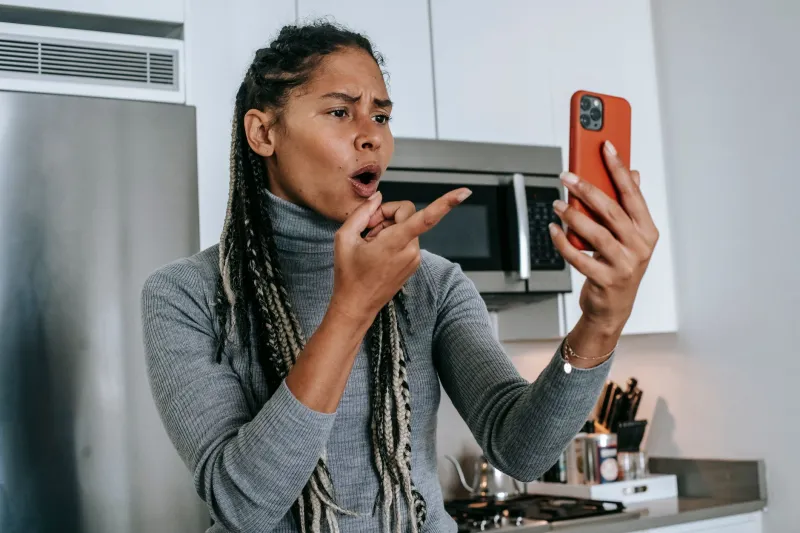
There's a particular kind of irony that lives rent-free in the minds of anyone born between 1981 and 2012. It goes something like this: you open Instagram to post a Story about how you're taking a break from Instagram. You film yourself explaining your digital detox for TikTok. You tweet about leaving Twitter — sorry, X — for good, and then check your notifications an hour later.
If this sounds familiar, you're not broken. You're just a digital native in 2024, caught in one of the defining contradictions of your generation.
The Detox That Never Really Detoxes
The term "social media detox" has been floating around wellness circles for years now, but it's taken on a new urgency lately. According to a 2023 Gallup survey, nearly half of Americans aged 18 to 29 say they're trying to spend less time on social platforms. And yet, screen time data tells a different story — average daily social media use among younger adults has barely budged, hovering around two to four hours depending on the platform.
So what's actually happening?
Dr. Keisha Morales, a licensed therapist based in Chicago who specializes in technology and anxiety, sees this pattern constantly in her practice. "My clients will come in and say they deleted the apps," she told us. "But what they really mean is they deleted them off their home screen. The apps are still there. They're still checking. The intention to quit becomes a performance of quitting."
That performance, she argues, isn't entirely cynical. It reflects a genuine tension between what people know is harmful and what their social and professional lives now demand.
Built to Keep You Coming Back
Let's be honest about something the wellness industry tends to gloss over: this isn't purely a willpower problem. The platforms themselves were engineered — deliberately, expensively, by some of the sharpest minds in Silicon Valley — to make leaving feel impossible.
Former Facebook product manager turned tech critic Rian Holloway (who asked us to use a pseudonym) spent six years building engagement features before leaving in 2021. "We used to joke internally that the goal wasn't to make a product people loved," he said. "It was to make a product people couldn't stop using even when they didn't love it. There's a difference. One is a good restaurant. The other is a casino."
The comparison to gambling isn't accidental. Variable reward schedules — the same psychological mechanism that keeps slot machine players pulling the lever — are baked into the notification systems, the algorithmic feeds, and the like counters that younger users grew up with. For Gen Z especially, this wasn't something they opted into as adults with fully formed brains. It was the water they swam in as teenagers.
The Economic Trap Nobody Talks About
Here's the part that gets complicated fast: for a significant chunk of Millennials and an increasing number of Gen Z adults, social media isn't just a habit. It's a job.
The creator economy — estimated to be worth over $250 billion globally — has absorbed an entire generation of workers who might have otherwise found stable employment in industries that no longer exist in the same form. Freelancers, small business owners, musicians, artists, personal trainers, therapists, even teachers — many of them rely on Instagram, TikTok, or YouTube not as a hobby but as their actual income stream or client pipeline.
"I've tried to quit three times," said Destiny Park, a 28-year-old graphic designer and part-time content creator in Atlanta. "And every time I do, I lose clients. I lose visibility. It's not like I'm addicted to doom-scrolling for fun — I'm addicted to my own livelihood being tied to an algorithm I don't control."
For Destiny and millions like her, the conversation about logging off carries a class dimension that rarely gets acknowledged. Quitting social media is a luxury that looks very different depending on whether you have a trust fund or a 9-to-5 to fall back on.
The Identity Problem
Beyond economics, there's something even thornier at play: identity.
Millennials were the first generation to build their adult social identities partly online. For many, their friendship networks, their dating histories, their professional reputations — all of it exists in some form on platforms they now claim to resent. Leaving isn't just closing an app. It's amputating a piece of your social self.
Gen Z, meanwhile, grew up in an even more extreme version of this reality. Many of them have never known a version of adolescence that wasn't partially mediated by a screen. Their inside jokes, their subcultures, their political awakenings, their first heartbreaks — all of it happened at least partly in public, online, in formats designed to be permanent.
"When I ask younger clients to imagine their life without social media, the reaction is almost always panic," Dr. Morales noted. "Not because they love the platforms. But because they can't separate their sense of self from the version of themselves that exists on them."
So Is a Real Escape Even Possible?
Some people do manage it. There are Millennials who deleted everything years ago and genuinely don't miss it — who rebuilt their social lives around group chats, in-person hangs, and old-fashioned email newsletters. There are Gen Z kids who grew up watching their older siblings burn out online and chose a different path from the start.
But they're outliers, and most of them will tell you that opting out comes with real costs: missed invitations, cultural references that land flat, professional opportunities that never materialized because nobody could find them.
The more honest framing might not be "how do I quit" but "how do I use this thing without letting it use me" — a distinction that's easier said than done when the entire product is designed to collapse that boundary.
There's a broader generational reckoning happening here, too. Millennials and Gen Z are increasingly the ones demanding platform accountability, pushing for algorithmic transparency, and supporting legislation around data privacy and mental health disclosures. The criticism isn't just personal. It's structural. They're not just trying to log off — they're starting to ask why the door was designed to be so hard to find in the first place.
The Scroll Goes On
Maybe the most honest thing we can say is this: the Great Unplug isn't really a mass exodus. It's a negotiation. A messy, ongoing, frequently hypocritical negotiation between a generation that knows better and a system that was built to make knowing better not quite enough.
The fact that so many young people are having the conversation at all — even if they're having it on TikTok — might be the most generationally revealing thing about this moment. They didn't invent the machine. But they're the ones who have to figure out how to live inside it, or without it, or somewhere in the uncomfortable space between.
And yeah, they'll probably post about it when they do.
