The Feelings Aren't Yours: How We Inherited Crises We Never Actually Lived Through

Somewhere in your emotional life, there's probably a fear that doesn't quite fit. A specific anxiety about money that goes beyond your actual financial situation. A reflexive distrust of institutions that feels more like a bone-deep conviction than a considered position. A sense of impending collapse that's hard to attach to any single cause.
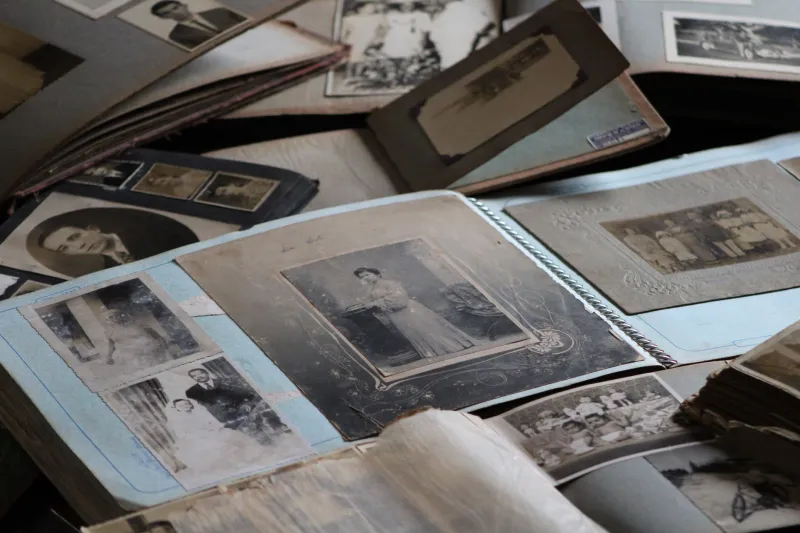
You might have assumed this was just the ambient condition of living in contemporary America. And you're partly right. But some of it — maybe more than you'd expect — was already there before you arrived. It was waiting for you, passed down through the specific channels of family and culture, wearing the costume of your own original experience.
We inherit a lot of things across generations. This one's about the emotional real estate.
The Transmission Nobody Talks About
Intergenerational trauma has gotten a lot of attention over the past decade, mostly through the lens of extreme historical events — the Holocaust, the Transatlantic slave trade, the internment of Japanese Americans. The research on epigenetic transmission and psychological inheritance in these contexts is increasingly robust, and it's reshaped how we think about the long reach of collective suffering.
But the transmission happens at smaller scales too, in ways that are harder to name because they don't have the moral weight of historical atrocity. They happen in the everyday emotional weather of a household. In the things parents never say directly but communicate through every financial decision, every reaction to news, every offhand comment about who can be trusted and who can't.
A Boomer parent who came of age during the Cold War, who genuinely believed nuclear annihilation was possible on any given Tuesday, who watched political leaders get assassinated one after another — that parent's ambient anxiety didn't evaporate when the Berlin Wall came down. It went somewhere. Often, it went into the emotional education of their children.
Gen X Got the Anxiety, Not the Context
Gen X grew up in households still processing the turbulence of the '60s and '70s — the assassinations, Watergate, stagflation, the social upheaval of the civil rights era and its incomplete resolution. Their Boomer parents had lived through genuine instability, and many of them responded by building a kind of fortress mentality: work hard, accumulate stability, don't trust the system but definitely participate in it because what's the alternative.
Gen X absorbed the distrust without always getting the full explanation for it. They inherited the emotional conclusion — institutions are unreliable, nothing is secure, watch your back — without necessarily having the specific historical reference points that generated it. This is partly why the Gen X reputation for ironic detachment and self-sufficiency makes so much sense: it's a coping strategy for anxiety that arrived without a manual.
The cynicism wasn't entirely invented. But it was also partly inherited, a hand-me-down emotional posture fitted to a body that had never personally experienced the specific betrayals that produced it.
Millennial Burnout and the Borrowed Script
Millennials have become the generational avatar of burnout — the cohort that coined the term "adulting" because adulthood felt like a foreign language, that turned exhaustion into a personality trait, that wrote thousands of essays about being too tired to function in a world that expected them to keep functioning.
Some of this is entirely theirs. They graduated into a recession, carried historic student debt, entered a housing market that had been asset-stripped by the generation before them, and watched their economic futures contract in real time. That's not borrowed suffering — that's the actual condition.
But some of the burnout script was already written. The Boomer obsession with productivity and self-worth through professional achievement — the belief that your value as a person is directly proportional to your output — was handed to Millennials as a baseline assumption before they ever entered the workforce. They didn't invent hustle culture. They inherited it and then, in many cases, ran it straight into the ground because they were the first generation to do so without the economic conditions that made it feel like it was working.
The anxiety about status, the terror of being seen as lazy or insufficient, the inability to rest without guilt — a lot of that predates the Millennial experience. It arrived with the furniture.
Gen Z and the Emotional Inheritance of Everything at Once
Gen Z has the particular distinction of having inherited emotional scripts from multiple generations simultaneously, delivered at high speed through a media ecosystem that collapses historical distance into an endless present.
They grew up with Millennial burnout as a cultural dominant. They absorbed Boomer anxiety about economic instability through parents and grandparents who never quite recovered their sense of security after 2008. They came of age during COVID, which activated every latent anxiety about mortality, isolation, and institutional failure that had been quietly accumulating in the cultural atmosphere for decades.
And they've been handed a climate crisis that previous generations created, acknowledged, and then largely failed to address — and told that the urgency they feel about it is theirs to carry.
Is it any wonder that rates of anxiety and depression in this cohort are historically high? Some of that is their own experience. But some of it is the weight of emotional inheritance from people who never fully processed their own crises and passed the unfinished work down the line.
Performing Crises We've Only Read About
There's a more uncomfortable dimension to all of this, and it requires some care to name without dismissing genuine suffering. Sometimes the inherited emotional script becomes a performance — not cynically, not consciously, but because the script is so culturally available that it shapes experience before experience has a chance to generate its own shape.
When a 22-year-old describes themselves as burned out, it's worth asking: burned out from what, specifically? Sometimes the answer is a real and specific accumulation of pressure, deprivation, and overwork. But sometimes the answer is fuzzier — a generalized sense of exhaustion that matches the cultural template of Millennial burnout more than it maps onto any particular lived experience.
This isn't an accusation. It's a feature of how emotional inheritance works. We absorb the vocabulary and the emotional logic of the generation before us, and then we use those tools to make sense of our own experience. The problem is that borrowed tools don't always fit the actual job.
Writing Your Own Story Without Throwing Away the Inheritance
None of this means the feelings aren't real. Inherited anxiety is still anxiety. Absorbed dread is still dread. The fact that the emotional content arrived via transmission rather than direct experience doesn't make it less present in your nervous system.
But there's something clarifying about asking: where did this actually come from? Is this my crisis, or am I performing someone else's? Is this fear mine, or did it arrive with the furniture?
The goal isn't to disown the inheritance — that's neither possible nor particularly desirable. Generational emotional transmission is also how empathy travels across time, how communities maintain collective memory, how the lessons of one era get encoded into the instincts of the next.
The goal is to hold it consciously. To know the difference between the grief that's yours and the grief you're carrying for someone who couldn't finish processing it. To recognize the scripts so you can decide which ones you actually want to keep performing.
Every generation gets handed a story that was already in progress when they arrived. The interesting question is always: what do you do with it from here?