We Were Never That Cool: The Stories Each Generation Tells Itself About Who It Used to Be
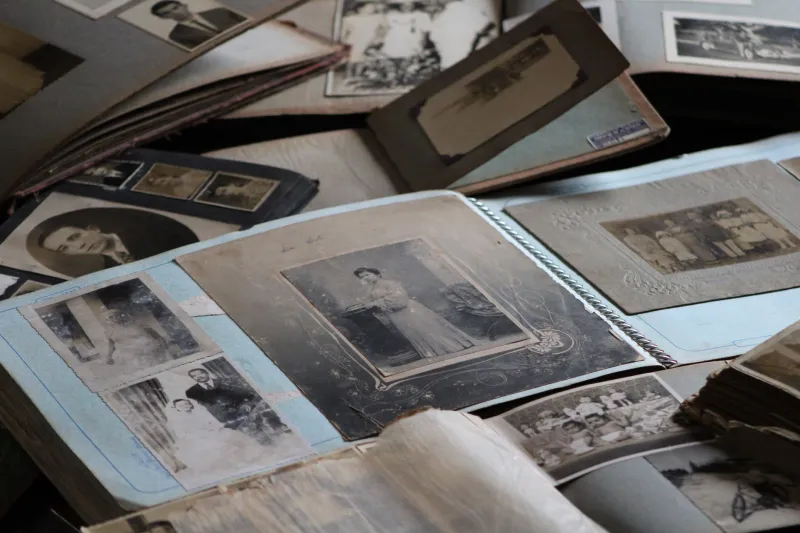
There's a version of you that existed before you got good at explaining yourself. Before you developed the vocabulary, the perspective, the distance. That version was messier, more contradictory, probably kind of embarrassing. And if you're being honest — really honest — you've spent years slowly editing them out of your own personal history.
You're not alone. Every generation does it. Collectively, culturally, at a scale so large it starts to look less like personal memory and more like mythology.
The '60s Were Complicated. The Story Isn't.
Ask most Boomers about the counterculture era and you'll get a highlight reel: Woodstock, civil rights marches, Vietnam protests, the birth of a generation that dared to question authority. And sure, all of that happened. But so did a lot of other things that tend to get left on the cutting room floor.
The same generation that marched for peace also built the suburban sprawl that ate American farmland. The same cohort that championed free love quietly enforced rigid social hierarchies based on race, gender, and sexuality — hierarchies that plenty of Boomers participated in rather than challenged. The counterculture was real, but it was also a minority experience within the generation. Most Boomers were not at Woodstock. Most were at home, watching it on the news, with complicated feelings they don't always bring up at dinner.
The rose-tinted reframe isn't malicious, exactly. It's human. But when an entire generation adopts a sanitized version of its own past as the official record, it shapes how they judge everyone who came after. If the '60s were purely heroic, then every subsequent generation's activism will always fall short by comparison. The myth becomes a measuring stick that was never quite accurate to begin with.
Gen X and the Convenient Amnesia About Apathy
Gen X built an entire identity around not caring. Slacker culture, ironic detachment, a studied indifference to the kind of earnest optimism that had defined the Boomers before them. And in the 1990s, that posture made a certain kind of sense — it was a response to broken promises, to the AIDS crisis being ignored, to watching idealism curdle.
But somewhere along the way, the apathy got rewritten as wisdom. The detachment became prescience. "We always knew institutions couldn't be trusted" is a very different sentence than "we didn't feel like trying." Both things were true at various points for various people. The problem is that the first version — the wise, seen-it-all skeptic — is the one that survived into the cultural memory, while the second got quietly retired.
Now, as Gen X moves into positions of authority and influence, that reframing has real consequences. If your generation's defining move was strategic disengagement, it becomes very difficult to champion collective action without confronting some uncomfortable inconsistencies in your own story.
Millennials and the Great MySpace Redemption Arc
No generation is currently more engaged in active historical revision than Millennials, partly because they're the first generation whose early awkwardness is documented online and therefore undeniable. You can't really pretend you weren't oversharing deeply personal information on a public blog in 2004 when the Wayback Machine still has receipts.
So the reframe took a different shape. The embarrassing early internet behavior got rebranded as radical authenticity. The parasocial obsessions became evidence of community-building instincts ahead of their time. The participation trophies Millennials spent years defending themselves against became symbols of a more emotionally intelligent parenting philosophy rather than what many of them actually experienced, which was fairly standard childhood competition with slightly different hardware.
None of this is entirely wrong. But it's also not entirely honest. The Millennial relationship with oversharing online wasn't always principled — a lot of it was just the specific loneliness of being a teenager with a dial-up connection and no one to talk to. Calling it visionary now is a little like calling your worst haircut "experimental."
Why We Do This — And What It Actually Costs
The psychological mechanism here isn't hard to understand. Memory is reconstructive, not archival. Every time you recall something, you're rebuilding it slightly differently based on who you are now. That's not a flaw; that's just how human cognition works. Narrative coherence feels safer than contradiction.
But when this happens at a generational scale, when millions of people are collectively smoothing out the same rough edges, it stops being psychology and starts being politics. The revised history determines what gets valorized, what gets blamed, and who gets held responsible for what.
When Boomers misremember the '60s as uniformly radical, they can dismiss Gen Z's climate activism as insufficiently passionate without acknowledging that most of their own generation was also watching from the sidelines. When Gen X rewrites apathy as ironic wisdom, they can critique Millennial sincerity without examining their own avoidance. When Millennials reframe their digital naivety as foresight, they can position themselves as uniquely qualified to guide the next generation through online spaces — despite having made every possible mistake in them first.
The cost is accountability. Not the performative, social media kind — the quieter, harder kind that requires sitting with the fact that you were once someone you might not entirely respect, and that this is actually fine, and that it doesn't need to be fixed by retroactively turning that person into a hero.
What Happens If We Just... Don't Revise
Here's the uncomfortable alternative: what if each generation allowed itself to be accurately remembered? Contradictions included. The Boomers who marched and the ones who didn't. The Gen Xers who saw through everything and the ones who used that as cover for checked-out passivity. The Millennials who were genuinely pioneering online community and also deeply, sometimes recklessly, oversharing.
It would make intergenerational conversation a lot more honest. It would make the criticism that older generations level at younger ones harder to sustain, because the grounds for comparison would be less mythologized. It would also make it harder for any generation to claim a clean moral legacy — which is probably why it doesn't happen very often.
The youngest generations are watching all of this in real time, by the way. Gen Z has grown up with enough access to historical documentation that they can fact-check the mythology pretty quickly. They know the '60s weren't all Woodstock. They've read the oral histories. They've seen the footage.
Maybe the most useful thing any generation can do for the ones coming after it is resist the urge to clean up its own story. Leave the contradictions in. Let the record show who you actually were — not who you eventually decided it was more flattering to have been.
Your younger self deserved better than to be edited out of existence. So does everyone else's.