There's No Room at the Inn (It's an Office Now)
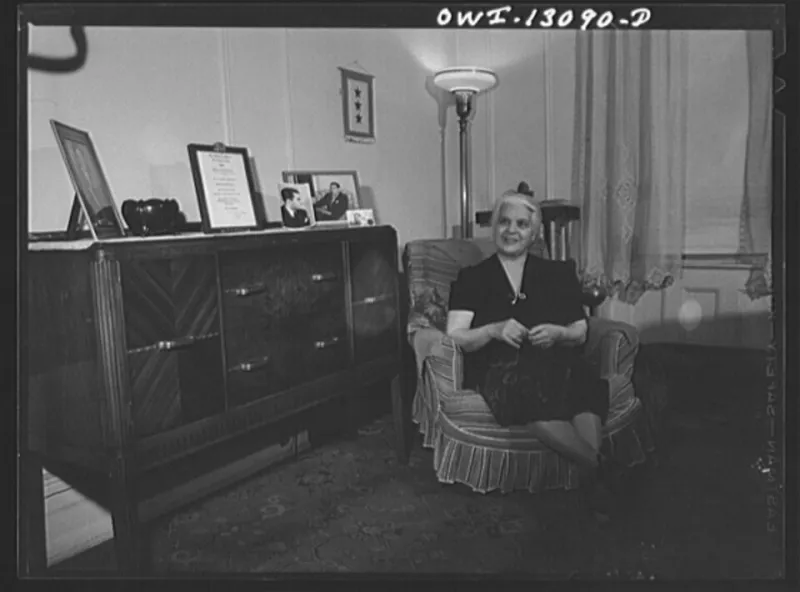
Photo: Marjory Collins, Public domain, via Wikimedia Commons
"You should come stay with us" used to be one of the most straightforward sentences in American English. It meant a bed, a casserole, a spare toothbrush still in its wrapper, and probably a dog who would sit on your feet.
Now it arrives with a slight pause. A follow-up question. A calendar link. Somewhere between the last truly affordable house and the first permanent work-from-home desk, the guest room quietly went extinct in a lot of households, and we're all still figuring out what to do with the sentence that used to live there.
The Spare Bed Became a Home Office
Housing got smaller and more expensive. Remote work turned the second bedroom into an office with a door, which matters enormously when you spend your day on video calls and your mother-in-law is doing her physical therapy video in the kitchen. Some of those rooms became nurseries. Some became storage units for the life you haven't sorted yet. A fair number became a gym setup that gets used three times a month, which is a whole other essay.
Meanwhile, budget math got tighter for everyone on both sides. For the host, staying for a weekend means grocery runs, extra laundry, and two days of reduced work output. For the guest, it means a flight, a gift, and a hotel-sized guilt trip if you accept the couch.
So the invitation got more hedged. And the acceptance got more anxious.
What "Come Stay With Us" Used to Mean
Ask different generations and you get very different memories of hospitality, which explains most of the confusion.
Boomers often grew up with the formal version — cleaned guest rooms, folded towels, a round of coffee offered within ninety seconds of arrival, and a host who would not sit down until the third evening. Hosting was a performance of capability, and refusing seconds was borderline rude.
Gen X grew up in the pull-out-couch era. You got the sectional, a pile of blankets, and total freedom. Nobody made a fuss. You were expected to find your own food and let yourself in. It was looser, less choreographed, and often more comfortable.
Millennials inherited the air mattress and the group vacation house. Hospitality became a collaborative project, complete with a spreadsheet and a Venmo request afterward. They're also the generation most likely to have converted the guest room into a pandemic-era office and to be genuinely apologetic about it.
Gen Z is the group most comfortable saying it out loud: "We don't really have space, but here are three hotels near us and we'd love to see you for breakfast." Older relatives hear that as coldness. It might just be more honest than a DIY air mattress and eight hours of silent resentment.
Hosting Anxiety Is Its Own Genre
Ask anyone under 40 about hosting overnight guests and you'll hear a version of the same list: Is the apartment clean enough? Is the bathroom acceptable? Do I have to cook, or is ordering in fine? How do I politely say I have a meeting at eight and can't do a sit-down breakfast?
The anxiety is partly about money and space. But it's also about the disappearance of a script. The old script was clear: host does everything, guest brings wine, everyone pretends it was effortless. The new script is being written in real time, often mid-visit, often by text from the next room.
There's a specific modern awkwardness in hosting while working from home. Your living space is also your professional space, and having people in it means performing "at home" during your breaks from performing "at work." It's exhausting in a way that's hard to explain to someone who retired before laptops colonized the kitchen table.
The Boundaries Conversation Is Good — But It Has Side Effects
Insisting on notice before a visit, being clear about what you can and can't offer, declining to lend out your home like a hotel — these are healthy things. They're the result of several decades of people, largely women, saying that hospitality shouldn't function as unpaid labor with a smile stapled to it.
That's genuinely progress. But it coexists with an American loneliness epidemic that got worse the moment everyone's spare room closed, the neighborhood bar shuttered, and the third places dried up.
When the couch disappears, a lot of people lose access to the cheapest form of connection. The invitation to crash, however cramped, was often the reason the visit happened at all.
What We Lose When the Bed Goes
We lose unplanned time. The best parts of a family visit rarely happen during the scheduled activity — they happen at 10:45 p.m. when someone's making tea and your aunt finally tells the story she never tells. That story requires a bed and a house that stays open past dinner.
We also lose something structural: the ability for an adult kid to come home. The room that could absorb a breakup, a layoff, a divorce, or a hospital discharge. That room is a safety net, and a lot of households have just... traded it for a standing desk.
And kids lose the specific, irreplaceable experience of the extended family sprawl — cousins in sleeping bags, an aunt on the couch, everybody fighting over the bathroom.
Host Slightly Worse, Invite Anyway
Here's a modest proposal. Say what you can actually offer — a bed, a couch, a floor, or a hotel recommendation with a standing invitation to dinner — and then stop apologizing for it. Hospitality doesn't require perfection. It requires someone in the room.
Guests, return the favor: accept the actual offer, don't overstay, buy the groceries, and go easy on the host who's been apologizing about the towels since you arrived.
The spare room may be gone. The point of it doesn't have to be.